We're sincerely grateful for your interest in our work. Before we proceed, we suggest reading a few real accounts of what has happened when people set out to re-engineer an ecosystem. The closest precedent to your plan: read it ↓.
Green Serpent · The Record
Precedent
Seven times humanity tried to out-engineer an ecosystem.
Green Serpent is a satire. The plans on the rest of this site — re-engineer a biome, delete the inconvenient species, wave away the externalities — are played for laughs. They are also not new. Below are seven real attempts to bend an ecosystem to a single human goal. Each was reasonable to someone. Each is a lesson in the one line every Green Serpent pitch leaves out: and then what?
011859Victoria, Australia
Rabbits, Australia
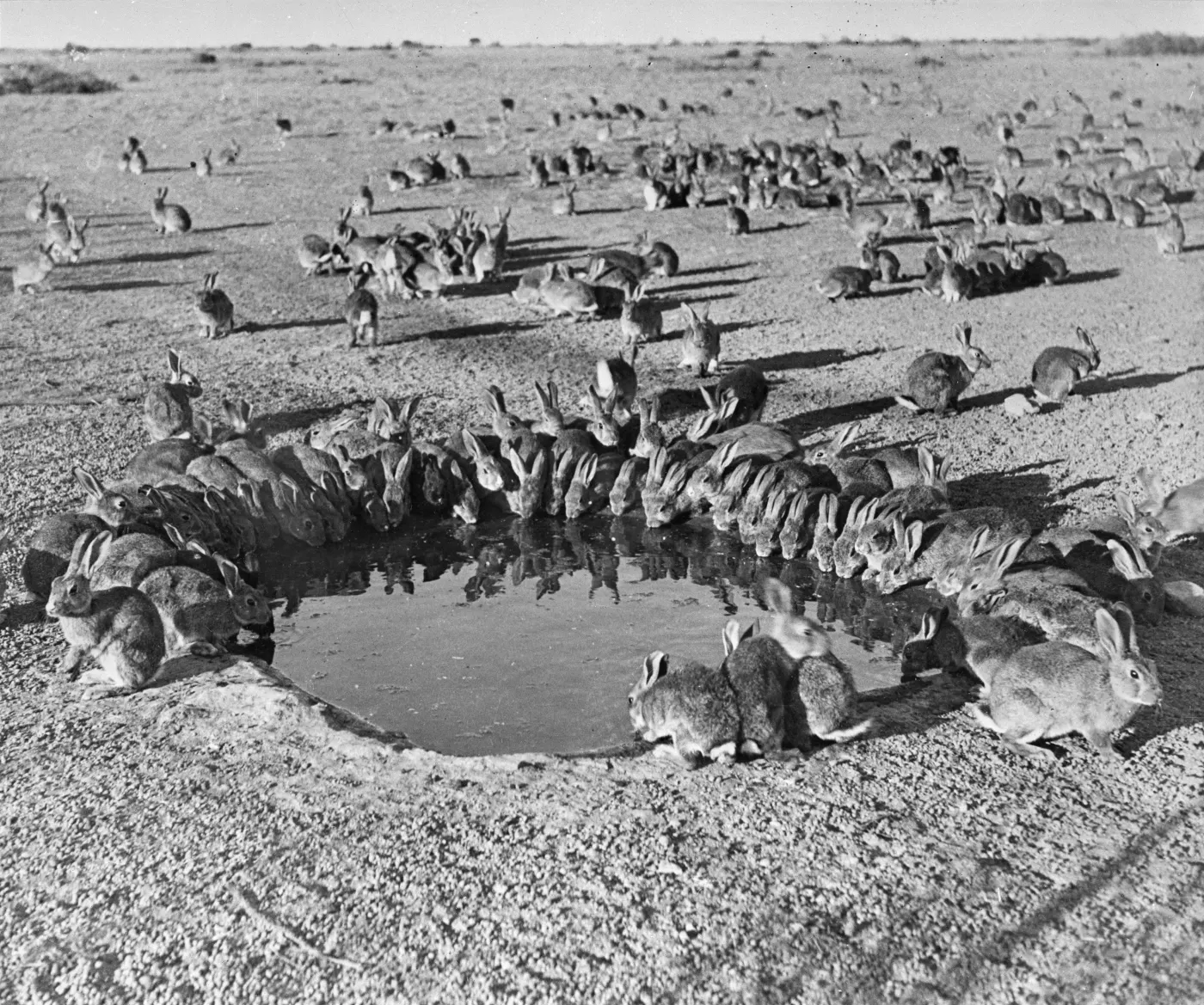
Rabbits at a trial site, 1938. National Archives of Australia · public domain.
The plan
Pastoralist Thomas Austin released two dozen European rabbits on his estate near Winchelsea to recreate the English country hunting he missed from home.
What happened
From those few animals the rabbits spread faster than any mammal ever recorded — within a decade two million a year could be killed without denting the population. They stripped vegetation and drove soil erosion, becoming a prime suspect in Australia's native-species losses, until a 1950s myxomatosis program cut numbers from an estimated 600 million to roughly 100 million.
The lesson
A trivial "touch of home" becomes an unstoppable continental catastrophe when a species meets an environment with no natural checks.
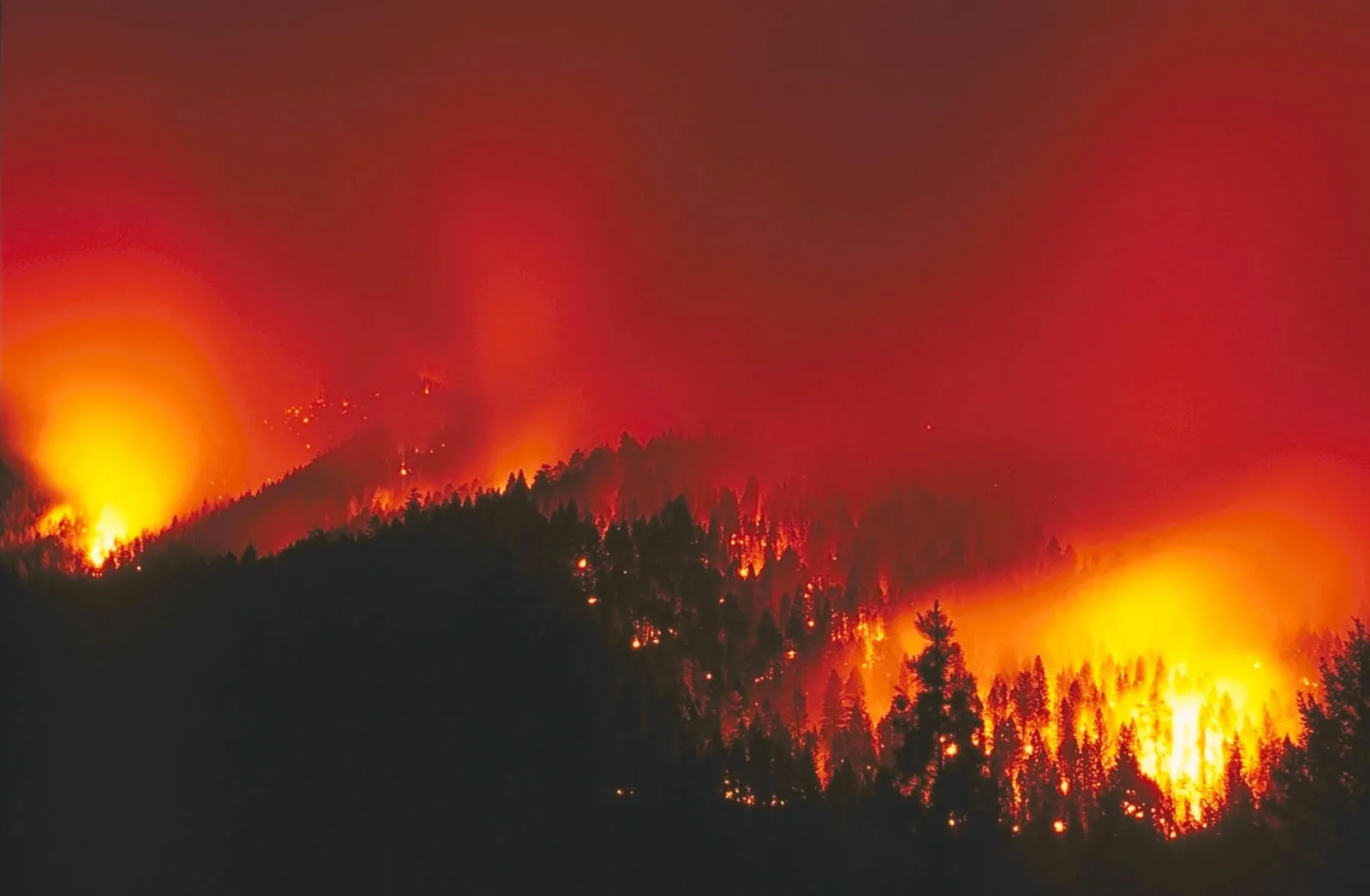
A crown fire — the kind a century of stored fuel now feeds. U.S. Forest Service · public domain.
The plan
After the Great Fire of 1910 — the "Big Burn," which scorched some three million acres and killed about 87 people — the young U.S. Forest Service resolved to eliminate wildfire altogether. By 1935 it was doctrine: the "10 a.m. policy" required every fire be controlled by 10 a.m. the morning after it was spotted.
What happened
But many forests are fire-adapted — lodgepole pine, jack pine and giant sequoia carry serotinous cones that depend on a fire's heat to open and release their seeds. A century of suppression let dead wood and underbrush pile up; combined with a hotter, drier climate, that stored fuel now drives larger, higher-severity "megafires" that scorch soils and kill even the mature trees that once would have survived. The Forest Service abandoned the 10 a.m. policy in 1978.
The lesson
Suppressing every small disturbance in a system that evolved with it doesn't remove the risk — it stockpiles it into a single catastrophic failure.
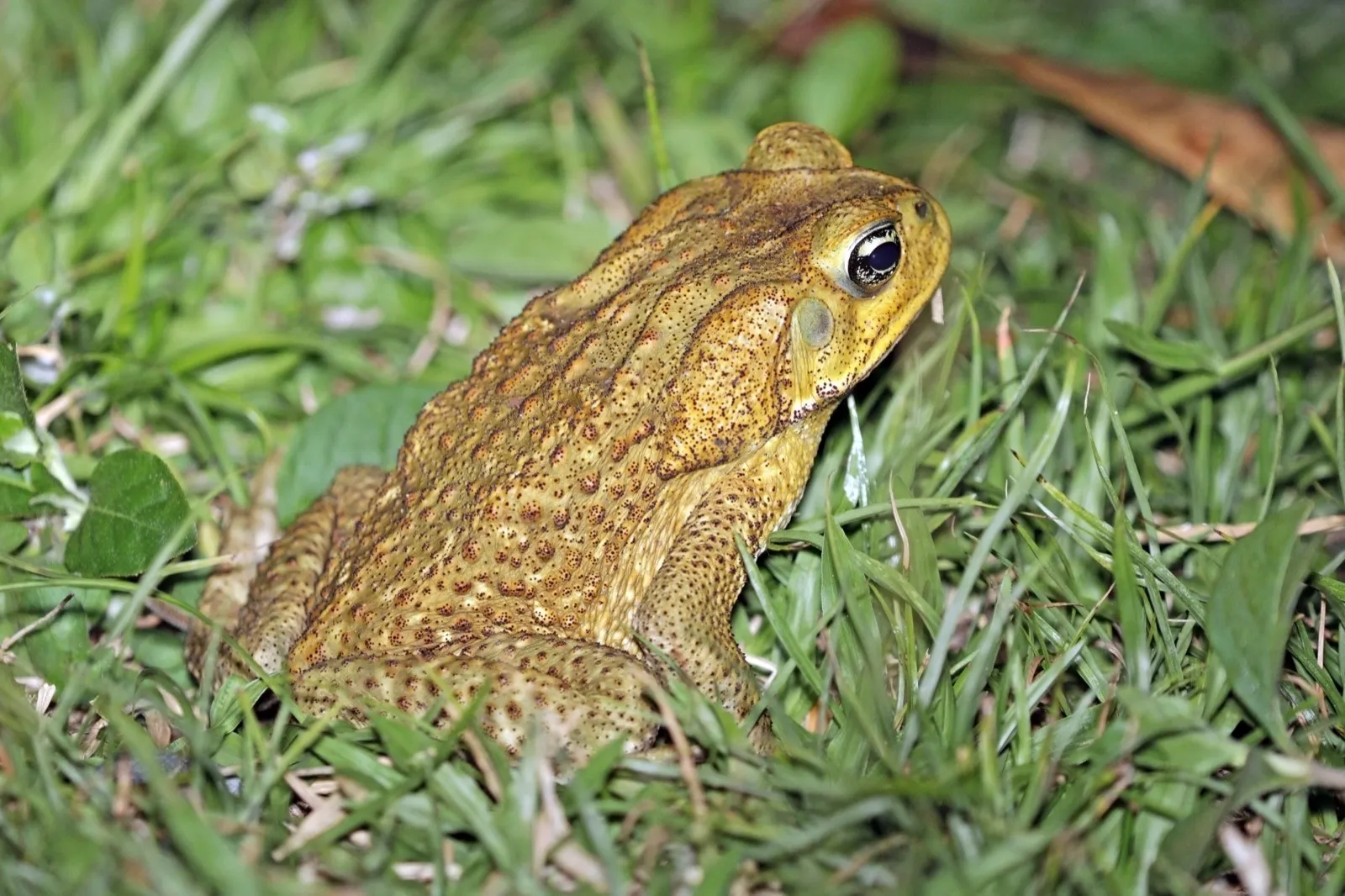
Cane toad (Rhinella marina). Charles J. Sharp · CC BY-SA 4.0.
The plan
In June 1935, 102 cane toads were imported from Hawaii to Gordonvale to eat the cane beetles damaging the sugarcane crop.
What happened
The toads largely ignored the beetles and instead bred and spread — an estimated 200 million by 2011, across vast stretches of northern and eastern Australia. Their toxins kill native predators that try to eat them; northern quolls and monitor lizards crashed, with some yellow-spotted monitor populations down by up to 90 percent.
The lesson
A biological "fix" deployed without studying the organism's actual behavior can fail at its job and become far worse than the problem.
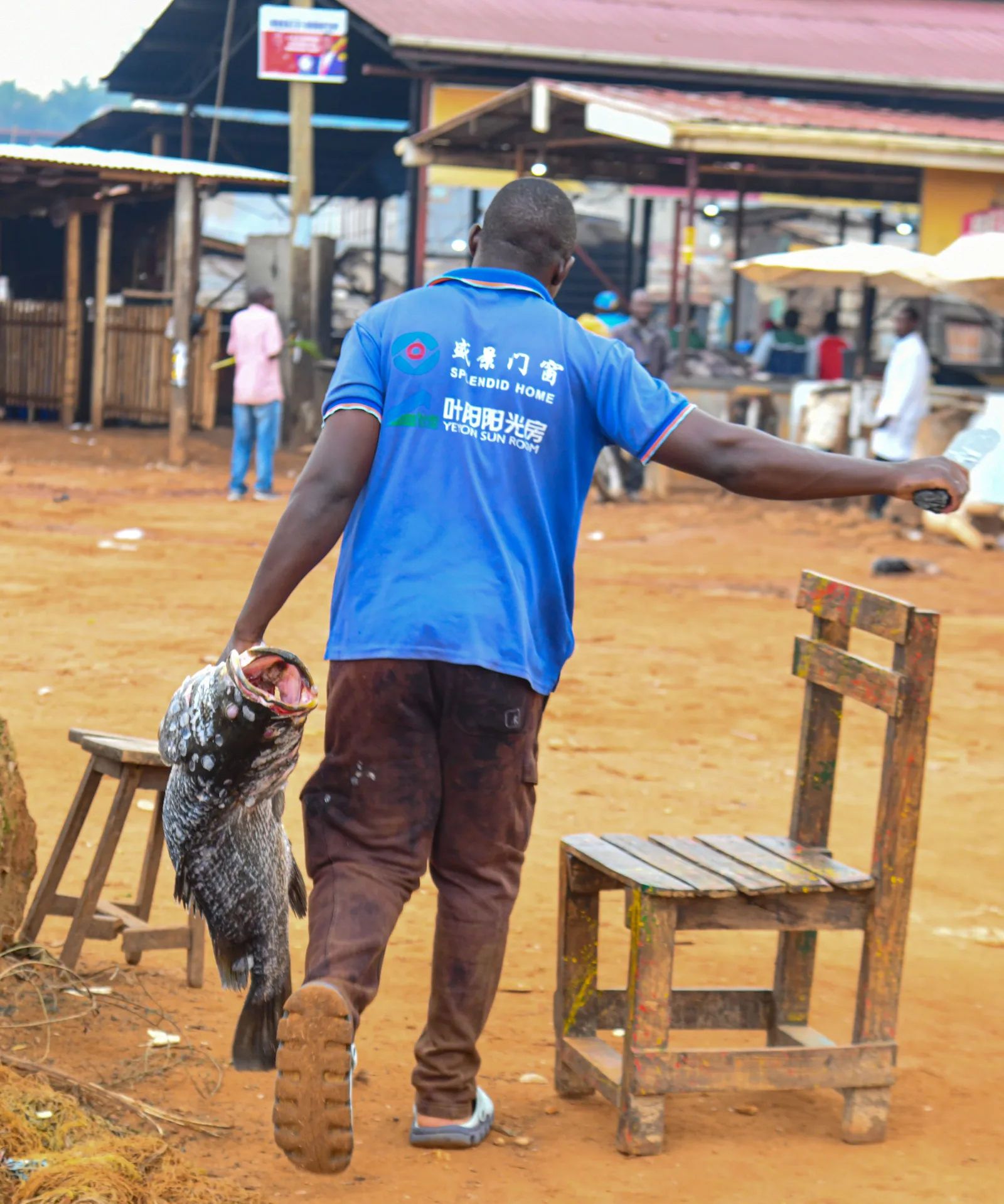
A Nile perch landed at Port Bell, Lake Victoria. Ssemmanda will · CC BY-SA 4.0.
The plan
Stock Lake Victoria with the large, predatory Nile perch to build a high-value export fishery — the lake's hundreds of small native cichlids were judged commercially unproductive.
What happened
Introduced around 1954 and stocked again in the early 1960s, the perch erupted across the lake in the 1980s and devoured the endemic haplochromine cichlids — an estimated 200 species, roughly 40% of the 500-plus found nowhere else, driven to extinction or near it, among the largest vertebrate mass-extinctions of modern times. Losing the algae-grazing cichlids fed algal blooms and oxygen-starved dead zones, while the perch became a frozen-fillet export to Europe whose oily flesh had to be smoked — driving deforestation for firewood.
The lesson
Dropping one "better" species into a lake to improve it can collapse the web beneath — and the wreckage cascades through ecology, economy and society at once.
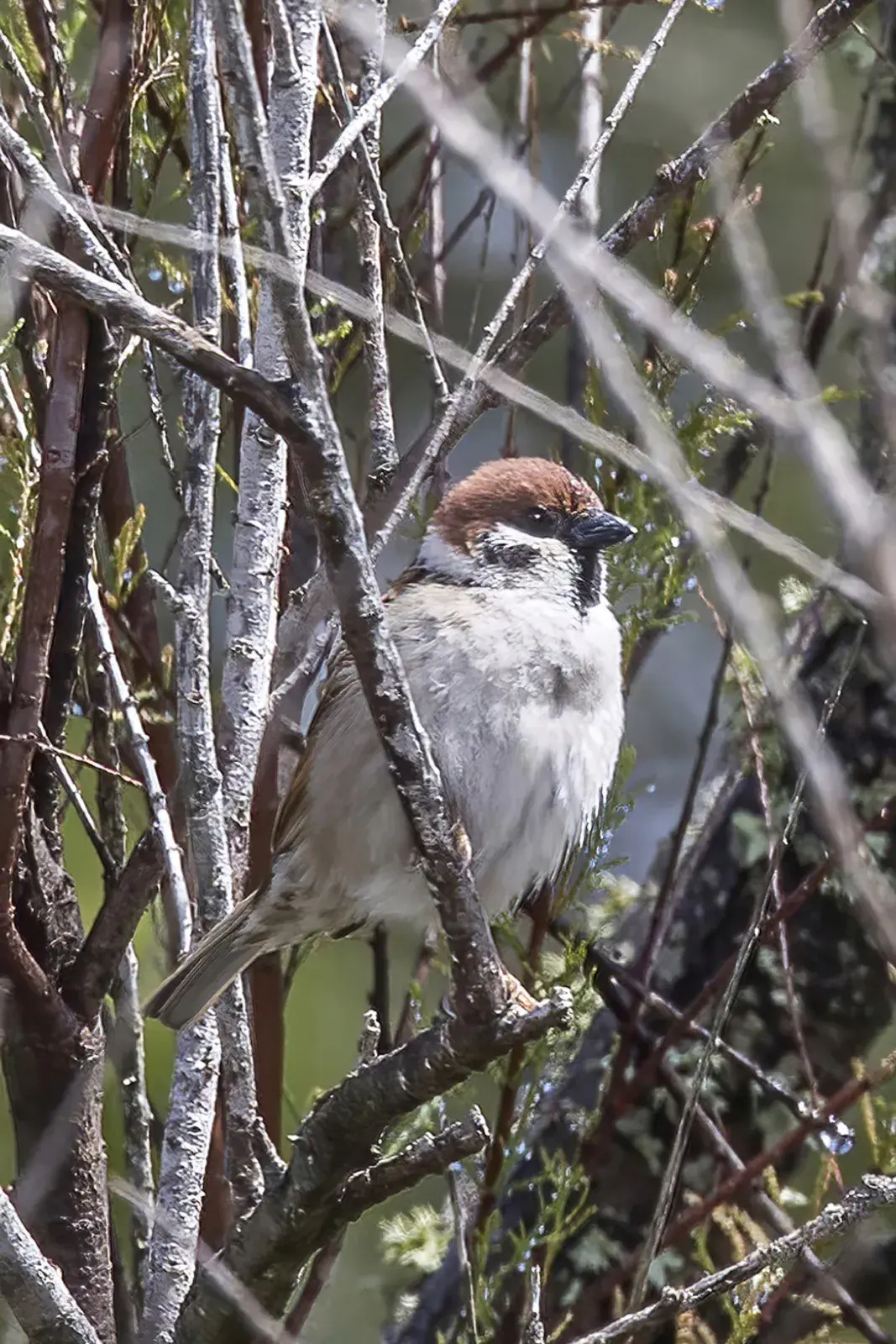
Eurasian tree sparrow — the campaign's target. Charles J. Sharp · CC BY-SA 4.0.
The plan
Launched in 1958 under the Great Leap Forward, the campaign mobilized the population to wipe out rats, flies, mosquitoes, and sparrows — the last for eating grain.
What happened
Citizens banged pots and drums to keep sparrows airborne until they dropped dead from exhaustion; authorities reported roughly two billion killed by 1959. With a key predator gone, crop-eating insect populations — including locusts — exploded and devastated crops, contributing to the Great Chinese Famine of 1959–1961 (whose principal causes were Great Leap Forward policies), with death-toll estimates ranging from about 15 to 55 million. China later imported sparrows from the USSR.
The lesson
Treating an ecosystem as a list of "pests" to delete ignores the web of dependencies that keeps it stable — and the bill can come due in famine.
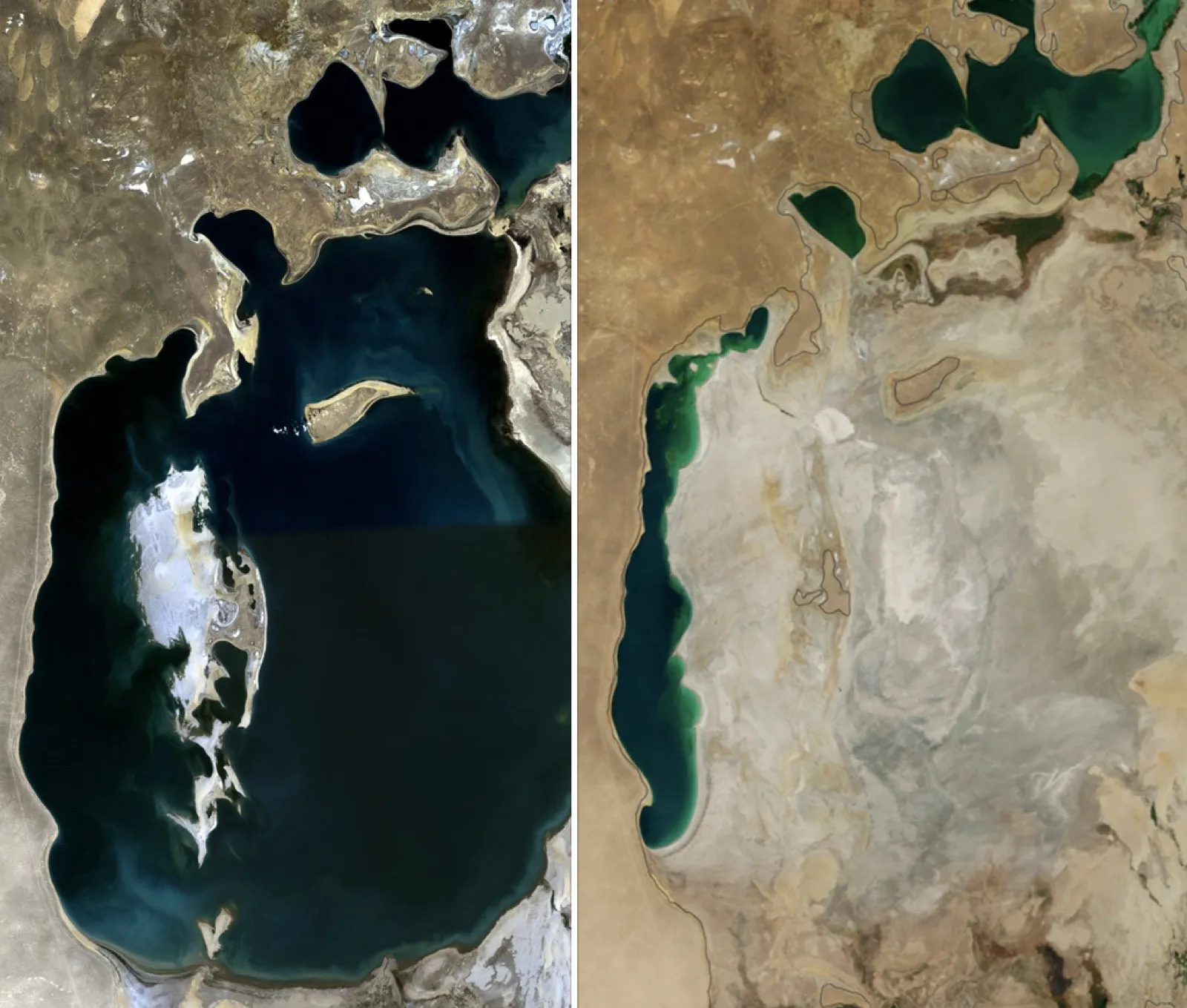
From the early 1960s, Soviet planners diverted the Amu Darya and Syr Darya rivers to irrigate desert farmland for cotton — "white gold" — across Central Asia.
What happened
Starved of inflow, the world's fourth-largest lake (about 68,000 km²) shrank to roughly 10 percent of its size by 2007; the eastern lobe vanished entirely in 2014. Salinity rose more than tenfold, collapsing a fishery that had supplied a sixth of the Soviet catch, while the exposed seabed became a salt-and-pesticide desert that still fuels toxic dust storms.
The lesson
Optimizing an entire watershed for one export crop can erase a whole sea — and the economy and climate that leaned on it.
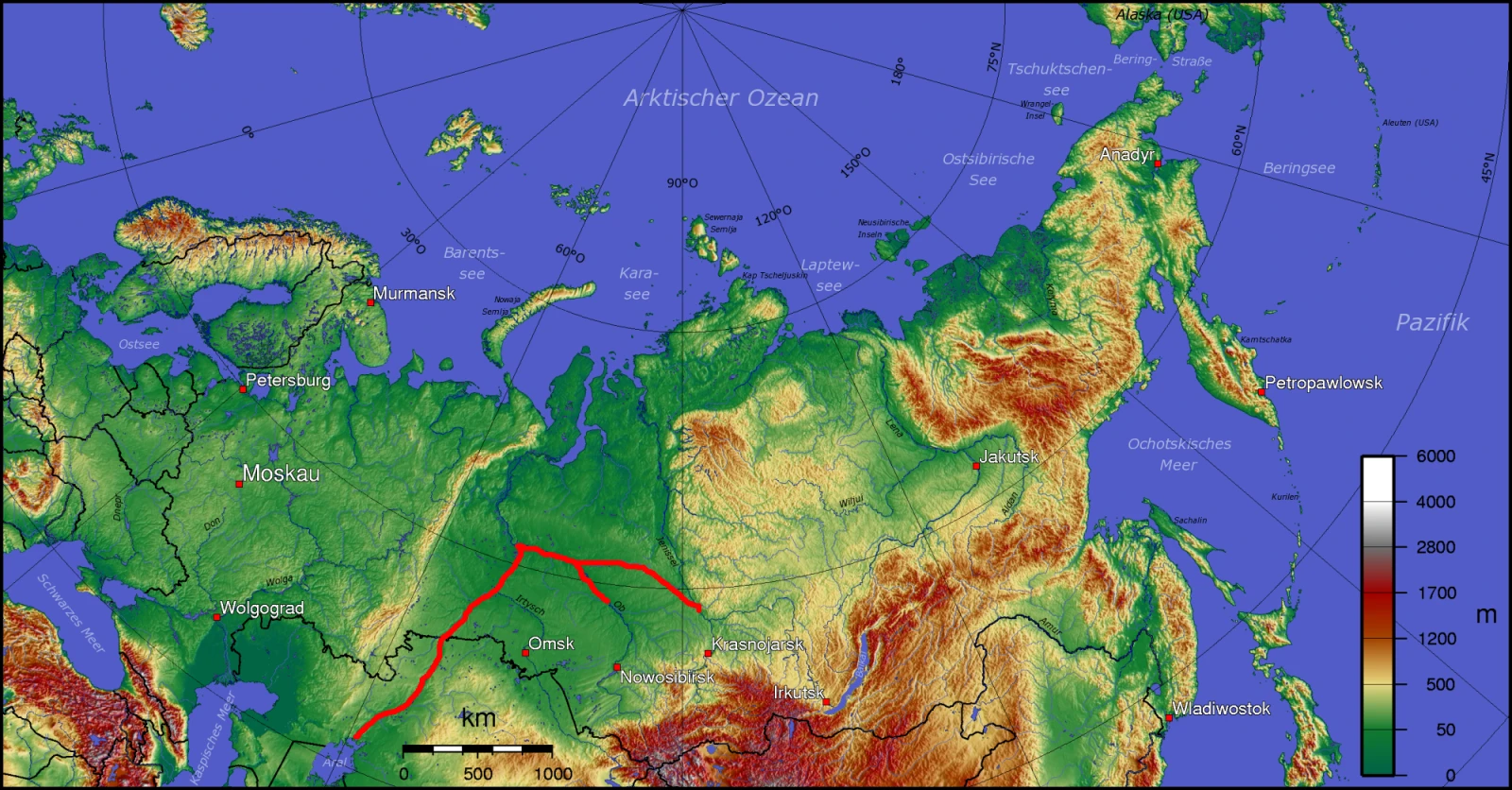
The proposed diversion of north-flowing rivers. Kapitän Nemo & Captain Blood · CC BY-SA 3.0.
The plan
Soviet engineers spent decades planning to reverse rivers that "uselessly" drained into the Arctic — redirecting them south to irrigate Central Asia and even refill the Aral Sea, digging the canals with nuclear blasts.
What happened
Under the "Nuclear Explosions for the National Economy" program, the 1971 Taiga test set off three ~15-kiloton devices to excavate part of the proposed canal, leaving a radioactive crater lake; the full diversion would have needed more than 250 such explosions. Scientists warned it could alter Arctic Ocean salinity and ice — and the Politburo finally cancelled it in 1986.
The lesson
Even nuclear-scale ambition can't outrun the externalities of re-plumbing a continent. The most prudent grand plan is sometimes the one you abandon.
Every idea here began as a solution. That is the point.
Green Serpent is fiction. The consequences above were not. If a plan only works when you don't ask "and then what?", it isn't a plan — it's the first chapter of one of these.

.jpg)